
How to Make Your Kid a Millionaire (Legally and Tax-Free)
The Custodial Roth IRA is the ultimate cheat code for financial freedom.

The Time Machine
If I could go back and tell my 16-year-old self one thing, it would be: “Start investing earlier.”
I can’t go back. But I can be that voice for my kid and hopefully yours.
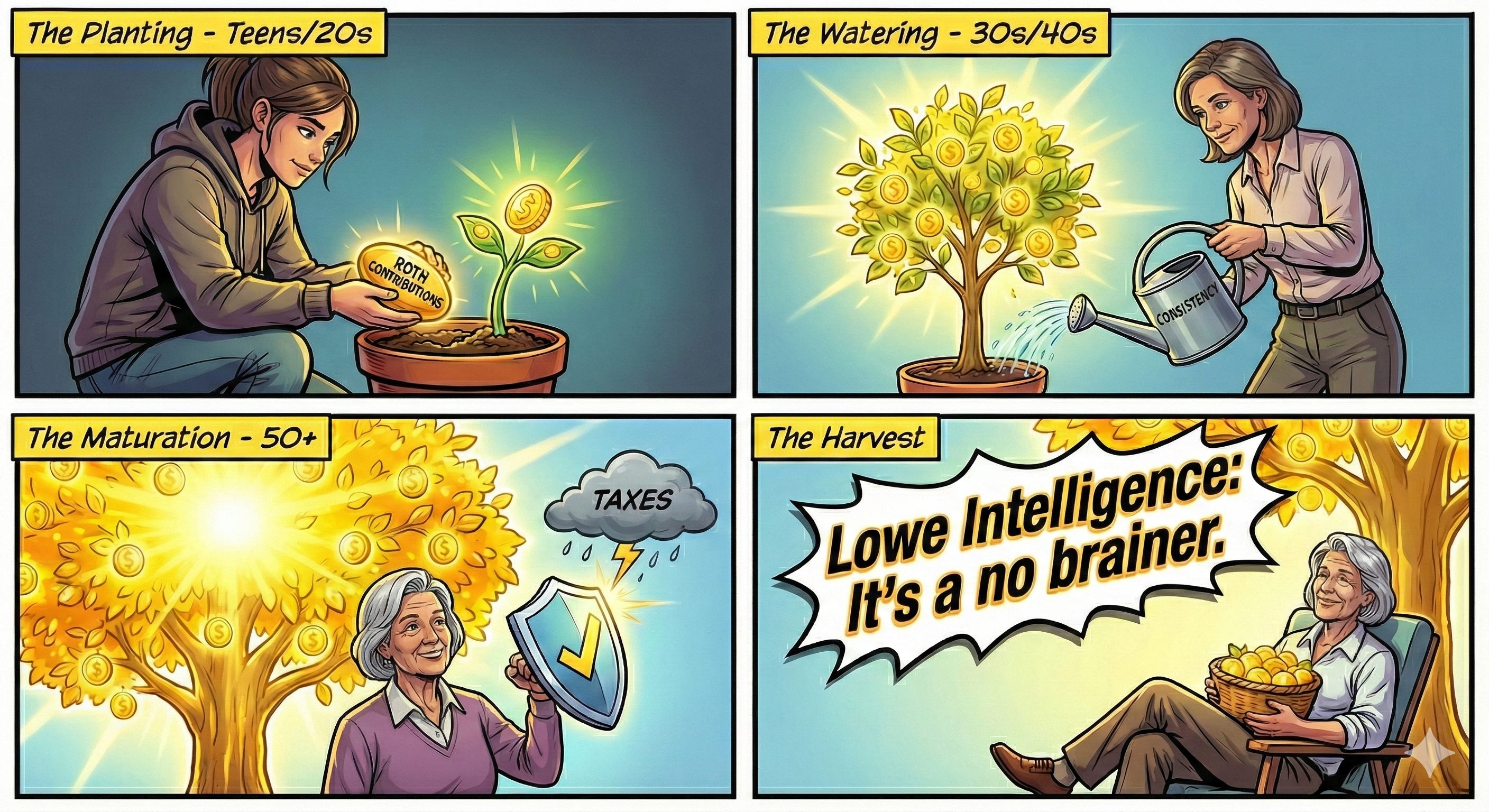
The biggest factor in building wealth isn’t picking the right stock. It isn’t even how much money you earn. It is time.
As the hosts of The Money Guy Show often say, every dollar you invest in your 20s turns into roughly $88 by retirement.
That is a staggering multiplier. But because your child is starting in their teens (with an extra decade of growth), that multiplier is even higher. If you open a Custodial Roth IRA for them now, you aren’t just giving them money they are earning it. You are setting them up for a tax-free fortune.
The Golden Rule: Earned Income
There is one catch. The IRS requires the child to have “Earned Income.”
You cannot open a Roth IRA for your toddler just because. They have to work.
Valid: W-2 income from a summer job (lifeguard, camp counselor, retail).
Valid: 1099 income or documented self-employment (babysitting, lawn mowing, dog walking).
Invalid: Allowance, birthday money, or “chores” that aren’t tracked.
The Limit: They can contribute up to the annual limit (in 2026 the limit is $7,500) OR the total amount they earned, whichever is lower.
If they earn $2,000, the limit is $2,000.
If they earn $10,000, the limit is the federal max (in 2026 it is $7,500).
The "20/80" Parent Match
The best option is to teach your child about investing early by having them put their own money to work. This builds a habit of delayed gratification. However, most teenagers want to spend their first paychecks on clothes, gas, or food when hanging out with friends.
One strategy to consider is a split contribution. If they invest at least 20% of their earnings. You then cover the remaining 80%, or whatever you can afford, as a “Parent Match.”
Scenario: Your daughter earns $3,000 as a lifeguard. The Move: She contributes $600 (20%) from her paycheck to her Custodial Roth IRA. You then contribute $2,400 (80%) of your own money to reach the $3,000 total.
She learns to pay herself first, but she still gets to keep $2,400 of her earnings to spend. You get the peace of mind knowing her future is being supercharged.
The Math (Prepare to have your mind blown)
Let’s say you do this just for her teen years.
She invests $6,000 a year for just 4 years (ages 16, 17, 18, 19).
Total Investment: $24,000.
The Growth: You invest it in a simple S&P 500 fund (like VTI) and never touch it again. Assuming a historical 10% average return...
At Age 60: That account is worth approximately $1.5 Million.
Read that again. $24,000 became $1.5 Million.
And because it is a Roth, that $1.5 million is 100% tax-free. The government gets zero.
The Action Plan
If you have a child under 18 that has earned income:
Open the Account: Go to Fidelity, Schwab, or Vanguard. Look for “Custodial Roth IRA”. You are the Custodian; they are the Beneficiary.
Link the Bank: Connect your checking account so you can transfer the funds.
Invest the Money: (Do not forget this step!) Once the cash is there, buy a low-cost total market ETF like Vanguard Total Stock Market Index (VTI)
Handover: When they turn 18 or 21 (depending on your state), the account legally transfers to them.
The Lowe Down
You don’t need to be rich to create a rich future for your kids. You just need to start early.
If your kid has a job (earned income), open a custodial ROTH IRA account. Teach them about investing and set them up for financial freedom.
It’s a no brainer.
Disclaimer: The author is not a financial advisor, lawyer, or a tax professional. This content is provided for educational and informational purposes only and does not constitute professional financial, legal, or tax advice. Because every individual's situation is unique, you should consult with a licensed professional before making any significant financial or legal decisions. The author maintains a personal investment in VTI. Please remember that past performance is not a guarantee of future results, and market conditions are subject to change.