
The Math of Resilience
30 years of crashes, recoveries, and the price of sitting out.

Market crash, downturn, correction, or whatever you want to call it: when the markets drop, rest assured the markets will eventually drop. You need to understand history to survive them. I will be the first to admit that seeing the market drop is terrifying. When I see my retirement balance drop significantly, my stomach still turns. It does not matter how many down cycles I have been through. The feeling of seeing hard-earned wealth vanish on a screen is visceral. However, history shows that the most successful investors are not those who lack fear, but those who refuse to let fear dictate their actions.
The 10-Day Penalty
The natural instinct during a crash is to get to safety and wait for the dust to settle. This is often the most expensive mistake an investor can make. Data from the last three decades indicates that if an investor put $10,000 in the S&P 500 in 1995 and left it untouched, you would have approximately $256,700 by the end of 2025. History shows that missing just the 10 best-performing days in that 30-year window would cut the final balance roughly in half at approximately $102,750. Missing the top 30 days would leave you with a balance of approximately $38,000.
We saw this play out clearly in 2025. Following the “Liberation Day” tariff announcement on April 2, the market plummeted. Those who panicked and sold missed April 9, 2025, which history now records as one of the best performing days in recent decades. The best days are almost always the neighbors of the worst days. If you are not there for the crash, you will not be there for the rocket ship.
The Discount Dividend: Staying the Course
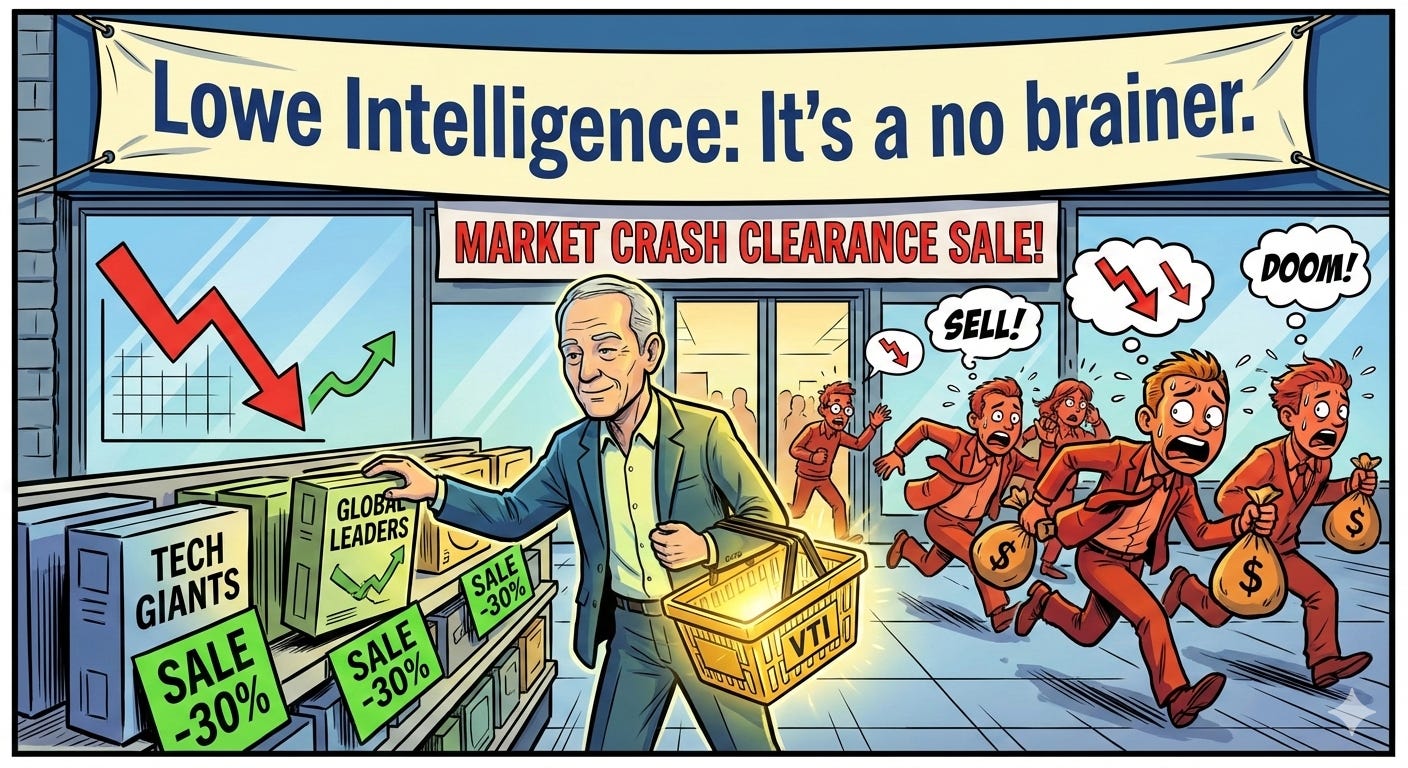
One perspective that helped me manage the anxiety of downturns was reframing the “loss.” A market downturn is essentially a temporary sale on the world’s most successful companies. When the market drops, staying the course allows an investor to continue with dollar cost averaging.
By investing a fixed amount at regular intervals, regardless of the price, you naturally buy more shares when prices are low and fewer when prices are high. This lowers the average cost per share over time. History shows that those who continue to buy when everything is “on sale” are the ones who see the greatest compounding in the recovery.
A History of Coming Back Stronger
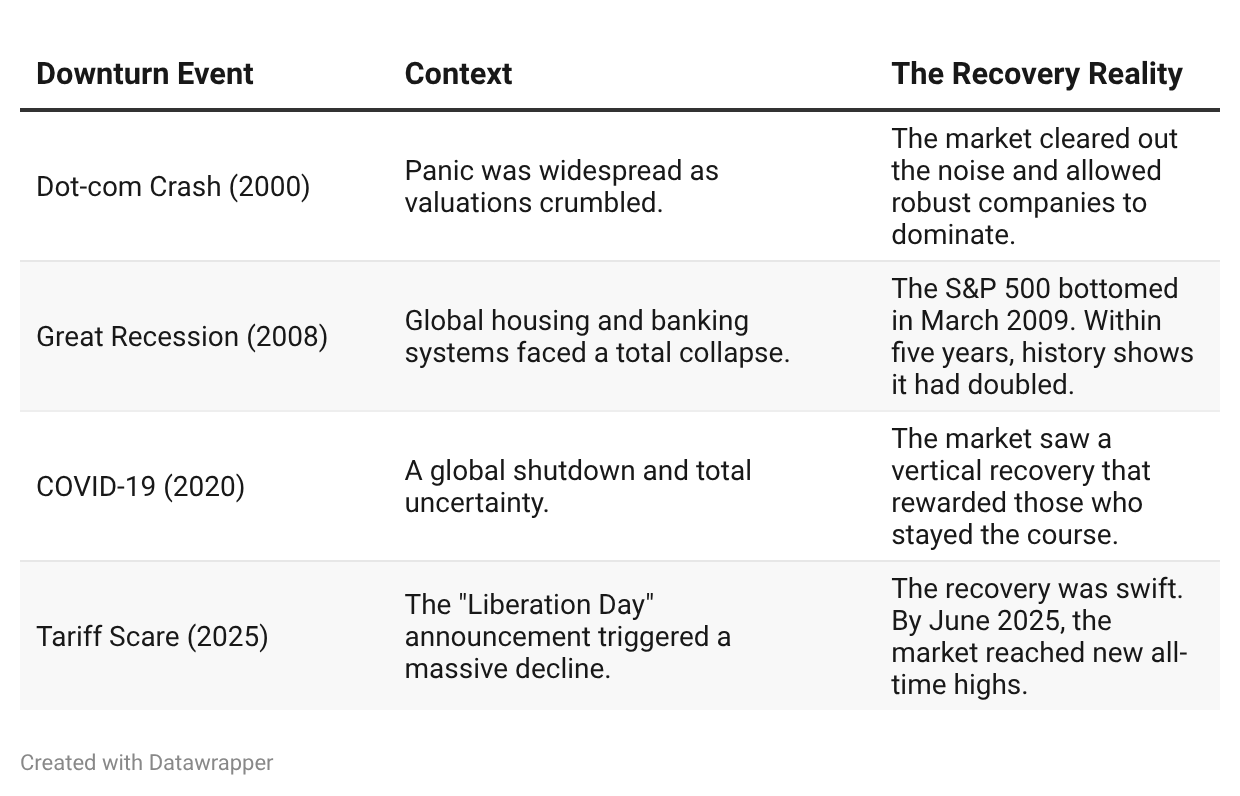
The major downturns of the last few decades reveal a clear pattern. The recovery does not simply return to the previous baseline. History shows it often builds a new, higher floor.
“This Time It’s Different” Trap
It is easy to fall for the idea that this specific crisis is the one that finally breaks the machine. We tell ourselves the world has fundamentally changed and that a recovery is impossible. It is a seductive thought because it validates our panic. However, betting against human ingenuity and economic recovery has been a losing strategy. Unless you are preparing for a total collapse of global civilization, in which case stocking up on guns and ammunition should be your primary concern and your stocks should be the least of your worries. The math says a rebound is inevitable.
The Allocation Reality Check
There is one major caveat to the stay the course mantra. If a market drop causes you panic because you need that money immediately for living expenses or a major bill, the problem isn’t the market. It is your allocation.
If you are in or near retirement years and a 20% drop in stocks makes you wonder how you will pay your mortgage next month, you do not have an investing problem. You have an architecture problem. Money needed within the next three to five years should not be fully exposed to the daily swings of the stock market. History shows that those who have a “cash bucket” or short-term bond or CD ladder can watch a crash with calm because they aren’t selling their growth assets to buy groceries. If you are losing sleep because you need the money right now, you haven’t failed at investing: you have failed at asset architecture.
The Lowe Down: It is okay to be scared when the market drops, volatility is the price of admission for long-term gains. By staying the course and continuing to dollar cost average, you treat a downturn like a clearance sale. History shows the most productive action during a downturn is often no action at all.
It’s a no brainer.
Disclaimer: The author is not a financial advisor, a lawyer, or a tax professional. This content is provided for educational and informational purposes only and does not constitute professional financial, legal, or tax advice. Because every individual’s situation is unique, you should consult with a licensed professional before making any significant financial or legal decisions. The author maintains a personal investment in VTI. Please remember that past performance is not a guarantee of future results, and market conditions are subject to change.
Further Reading & Data Sources
To see the raw data behind these market cycles, you can explore the following benchmarks:
J.P. Morgan Asset Management: Annual returns and intra-year declines
S&P Dow Jones Indices: S&P 500 Historical Returns
Clark Howard: S&P 500 Investment Calculator
S&P 500: $10000 in 1995 → $256,738.15 in 2025