
Tipping Overboard
How to ensure your gratuity reaches the right hands.

Modern payment terminals have made tipping nearly universal. A screen is flipped toward you at a sandwich shop or coffee counter, and you are presented with a set of percentage options. While the intent of a tip is to reward the service worker, the destination of that money is not always guaranteed.
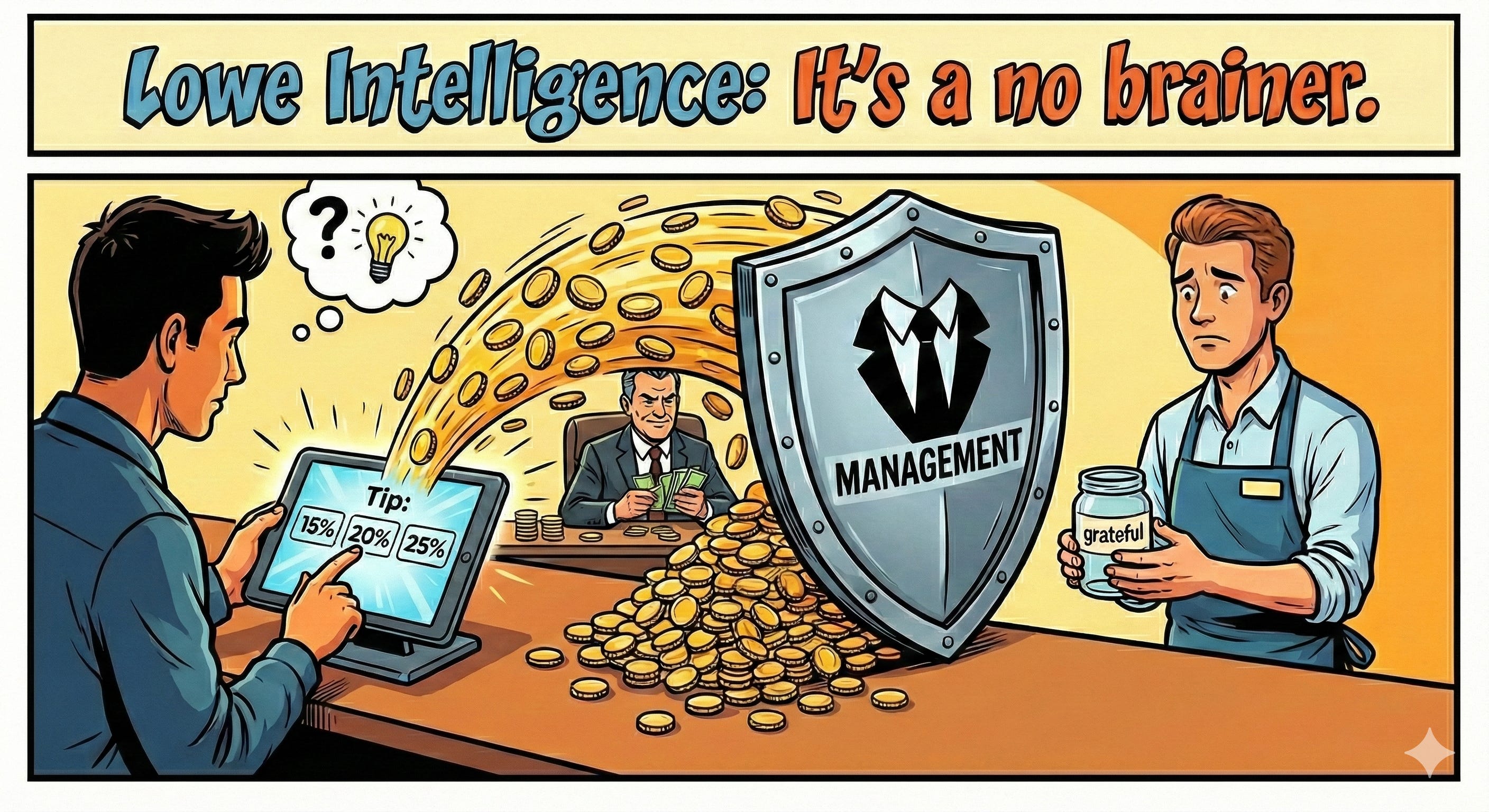
A friend recently shared a situation involving their son, who worked for a national sandwich chain. Despite customers clicking the 15% or 20% button on the tablet, the staff never saw a dime of those electronic tips. The money went directly to management to offset operational costs.
This realization changed how I approach the checkout counter. It is not about being stingy. It is about intellectual honesty in where my capital goes. What worked for me was developing a simple, two-second habit. Before I select an amount on the screen, I ask the person behind the counter a direct question:
“Do these tips go to you, or does the company keep them?”
This transparency allows for a fully informed decision. If the worker confirms they receive the tip, I proceed as usual. If the tip doesn’t align with my expectations, I don’t pay the premium. Verification ensures your generosity serves its intended purpose.
The Lowe Down
Don’t assume digital convenience equals transparency.
Ask who receives the tip before you tip.
Align your generosity with your intent.
If the structure doesn’t match your values, adjust accordingly.
It’s a no brainer.
Disclosure: The author is not a financial advisor or a lawyer. This content is for educational purposes only and does not constitute legal or financial advice.
Technical Note: The video for this article was created using Google Flow / Veo 3.1. Creating the video reinforced a broader lesson: AI tools are powerful, but precision still requires iteration. The leverage is real but so is the work of refinement (eventually I settled, because perfection is the enemy of progress).