
62% of Gen X Has No Estate Plan
Gen X is the least estate-prepared generation in America at exactly the moment it can least afford to be.

When my father was diagnosed with brain cancer, he had roughly three months before he was debilitated. He used them. He made sure my mother was on every account. He assembled the military notification forms and instructions that his service required. We sat together and talked through his wishes for burial. He began leaving notes about things of meaning and significant importance, the kind of details that exist only in a person’s head until they take the time to write them down. He did not have enough time to finish. He started, and then he was gone. The weeks that followed were grief, not chaos, because the critical documents were in place and we knew where to find them. But I have thought often about what did not get written down, and what we lost with it.
Then I asked myself the harder question: if I got that call tomorrow, would my family have the same experience?
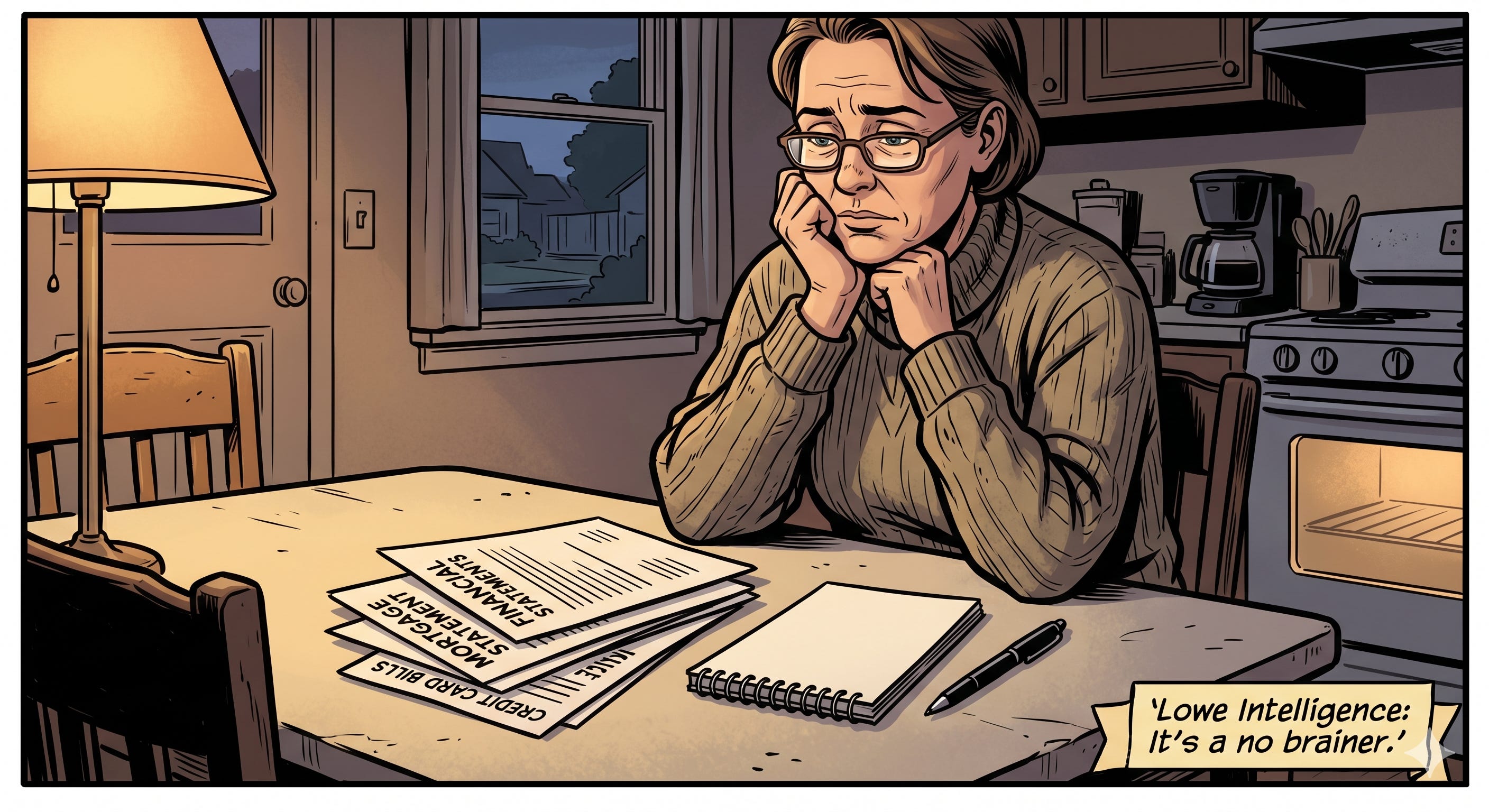
According to Trust & Will’s 2026 Estate Planning Report, a survey of 5,000 U.S. adults conducted by Talker Research, 62% of Gen Xers would have to answer no. They have no estate planning documents at all: no will, no trust, no power of attorney, no healthcare directive. That is the worst protection rate of any American generation. Millennials come in at 58% unprotected, Gen Z at 54%, Boomers at 48%. Gen X is the least protected cohort in the country, and this is precisely the wrong stage of life to carry that exposure. This is the generation now managing retirement accounts, real estate, dependent children, and aging parents simultaneously.
The Psychology of the Delay
The Trust & Will report does not frame Gen X as uninformed. It frames them as stuck. The same 2026 report found that 73% of Americans believe estate planning is personally important. Only 44% have done anything about it. That gap is not ignorance. It is behavioral.
Researchers at the Federal Reserve Bank of Cleveland identified what they call a mortality belief bias. Individuals consistently overestimate their near-term risk of dramatic death from accidents and sudden illness, while underestimating the slower, ordinary risks of aging and incapacity. The fear is loud enough to create anxiety, not specific enough to produce action.
There is also the End of History Illusion: the documented human tendency to assume our future selves will remain largely like our current selves, even as we acknowledge how much our past selves changed. The version of you who will need a healthcare directive or a trust feels far away. Psychologically, it is always far away.
For Boomers, the trigger arrived with the death of a parent. The Trust & Will report found that 19% of people who completed an estate plan were motivated by a loved one’s death. Boomers have had that experience. The Trust & Will report notes that for Gen X, that reality has not yet arrived, and attributes that gap as a primary driver of the delay.
Why a Will Is Not Enough
According to the Trust & Will report, a will is the most commonly held estate planning document in America, owned by 26% of adults. It is also insufficient for the question Gen X actually needs to answer.
I covered the full case for estate planning in a prior issue, The Final Act: Why You Need an Estate Plan and Why You Need to Talk About It. The core argument there stands: without a plan, the state decides who gets your assets and who raises your children, and probate court takes the time, money, and privacy your family does not have to spare. A revocable living trust, financial power of attorney, and healthcare directive are the foundation. If you have not read that piece, start there.
But for Gen X specifically, a will alone is structurally inadequate for a different reason: it only takes effect after death. It does nothing if you are incapacitated. And Gen X is now firmly in peak complexity, managing retirement accounts, real estate, dependent children, and aging parents simultaneously. The document that protects your family while you are alive is just as important as the one that protects them after you are gone. That means adding a Health Insurance Portability and Accountability Act (HIPAA) authorization to the stack, which allows your designated healthcare proxy to access your private medical records when they need to make decisions on your behalf.
One more trap worth naming now, though it deserves its own article: none of these documents govern your retirement accounts or life insurance. Those assets pass through independent beneficiary designations that override your will entirely. If you still have a former spouse listed on a 401k, or a deceased parent on a life insurance policy, the asset bypasses your estate plan and goes where the form says. Review every beneficiary designation you own.
The Path Is Shorter Than You Think
As I covered in The Final Act, this is not a do-it-yourself project. For Gen X managing a trust, a financial power of attorney, a healthcare directive, and a HIPAA authorization, a local estate attorney is the right call. Probate rules, trust requirements, and power of attorney statutes vary by state. The documents have to actually work when they are needed, and that requires someone who knows the law where you live.
Before you pay out of pocket, check your employee benefits portal. Some employers include legal plans that cover estate planning, sometimes including a revocable living trust. It takes five minutes and could cover most or all of the cost.
If your only goal right now is to close the gap between having nothing and having something, the National Council on Aging published a tested review of online will-making platforms in 2026 after 200-plus hours of evaluation. The link is in the Additional Resources section below. A basic will produced by any of the recommended services is better than no will. But it is a starting point, not a finish line.
A 7-day path:
Check your employee benefits portal for a legal plan that covers estate planning, then schedule an attorney consultation regardless of what you find.
Inventory what you own and who you want to inherit it.
Identify who you trust to make financial decisions and who you trust to make medical decisions if you cannot.
Have the conversation with those people before you name them legally. Confirm they are willing. Share your general intentions. Tell them where things will be. This step may take more than a day. Schedule the call, the meeting, or the coffee.
Pull every retirement account and life insurance policy and review every beneficiary designation.
Inventory the things in your life that carry meaning: the items, documents, and stories that matter beyond their dollar value. Write down what you wish for each one. This is the step my father started and did not have time to finish. AI can help here: describe an item or a memory and let it help you put your wishes into words.
Use that time to prepare for the attorney appointment with your inventory and beneficiary list in hand.
If scheduling takes longer than a week, that is normal. If you want something in place while you wait, the NCOA review in the Additional Resources section below identifies tested online platforms for a basic will.
Once the documents are signed, the job is not done. A trust that has never been funded is an empty bucket. Retitle your home into the trust. Transfer your taxable accounts. Review retirement account beneficiary designations separately. Those pass outside the trust entirely. Store your original documents in a fireproof and waterproof bag or a home safe, and make sure the people you named know where to find them. Then tell your executor and trustee where everything is, who is in charge, and why you made the decisions you made. One conversation now prevents months of conflict later.
My father had three months to get his affairs in order. He used every one of them, and it still was not enough time to finish everything. I still think about what we lost in what did not get written down. Do not risk it. Get it done.
The Lowe Down
The minimum document stack every adult needs is not a will. It is four things: a revocable living trust, a financial power of attorney, a medical power of attorney with advance directive, and a HIPAA authorization. A will without these leaves your family exposed during incapacity, not just after death, and sends your estate through probate court. According to NOLO, probate fees can run into thousands of dollars depending on estate size and state law. The process is public record and can take a year or more to resolve..
Before you pay out of pocket, check your employee benefits portal. Some employers include legal plans that cover estate planning, sometimes including a full trust. It is a five-minute check that could save you hundreds.
Beneficiary designations on retirement accounts and life insurance policies override your will. They go where the form says, not where your estate plan says. Review every one of them this week.
Once the documents are signed, fund the trust. Retitle your home. Transfer your taxable accounts. An unfunded trust is an empty bucket. The documents mean nothing if the assets are not connected to them.
The best time to close this gap was ten years ago. The next best time is this week.
It’s a no brainer.
Additional Resources
Related Reading
The Final Act: Why You Need an Estate Plan and Why You Need to Talk About It
Your College Student is a Legal Stranger (And Why That’s Dangerous)
Research
Trust & Will, “2026 Estate Planning & Inheritance Report,” conducted by Talker Research, April 2026
National Council on Aging, “The Best Online Will Makers of 2026: Tested and Reviewed,” April 2026
Disclaimer: This content is for informational and educational purposes only. It does not constitute financial, legal, or investment advice. Always consult a qualified professional before making financial decisions.
Lowe Intelligence is a trade name of ForsythTrail LLC, a Virginia limited liability company.