
So Much in Life Is Luck. The Rest Is Up to You.
The part you were born into. The part you build.

A special edition, published April 28th at 3:30pm:
You'll understand why by the end.
None of us chose the first roll of the dice. The country we were born into, the decade we arrived in, the parents who were waiting, the body we got, the neighborhood that shaped us before we understood what shaping was. Those circumstances did not ask our opinion. They set the table before we pulled up a chair. That category of luck is real, it is enormous, and there is nothing prescriptive to say about it because it is already done.
But inside all of that unchosen circumstance, there is a narrower and more interesting category of luck. The kind that concentrates around behavior. The kind you can actually do something about.
The Science Behind Lucky
Richard Wiseman, a psychologist at the University of Hertfordshire, spent ten years running one of the more unusual research programs in behavioral science. He recruited people who considered themselves consistently lucky and people who considered themselves consistently unlucky, and he watched what they actually did differently.
The findings, published in the Skeptical Inquirer in 2003, were not what most people expect. Lucky and unlucky people did not differ in their circumstances. They differed in their behavior. Lucky people built broader networks, remained open to unexpected experiences, and pursued a wider range of opportunities. Unlucky people were more anxious, more rigid, and more narrowly focused on specific expected outcomes. Wiseman then ran a “Luck School” to test whether unlucky people could change this. After a month of practicing specific behaviors, 80% of participants reported being happier and luckier than before.
What Unlucky People Miss
Wiseman ran an experiment that illustrates the mechanism more clearly than any statistic. He handed participants a newspaper and asked them to count the photographs inside. Buried on the second page, printed in large type, was a message: “Stop counting. There are 43 photographs in this newspaper.”
The unlucky participants missed it completely. They were too focused on the task to notice what was right in front of them. Anxiety and narrow focus do not just make you tense. They shrink your perceptual field. The opportunities directly in your path become invisible because you are scanning for the one specific outcome you are expecting.
The Orchard
Wiseman uses an analogy. If you return to the same corner of an orchard every day, you will eventually exhaust it. You pick what is there, and then there is nothing left. But if you vary your route, wandering into unfamiliar sections, you keep finding apples.
The entrepreneur Naval Ravikant describes something similar when he talks about luck generated from action and motion. You create luck by stirring things up, by generating enough energy across enough domains that random collisions become frequent. It is not magic. It is math.
The practical question this raises is direct: where have you stopped wandering?
The No Brainer Rules
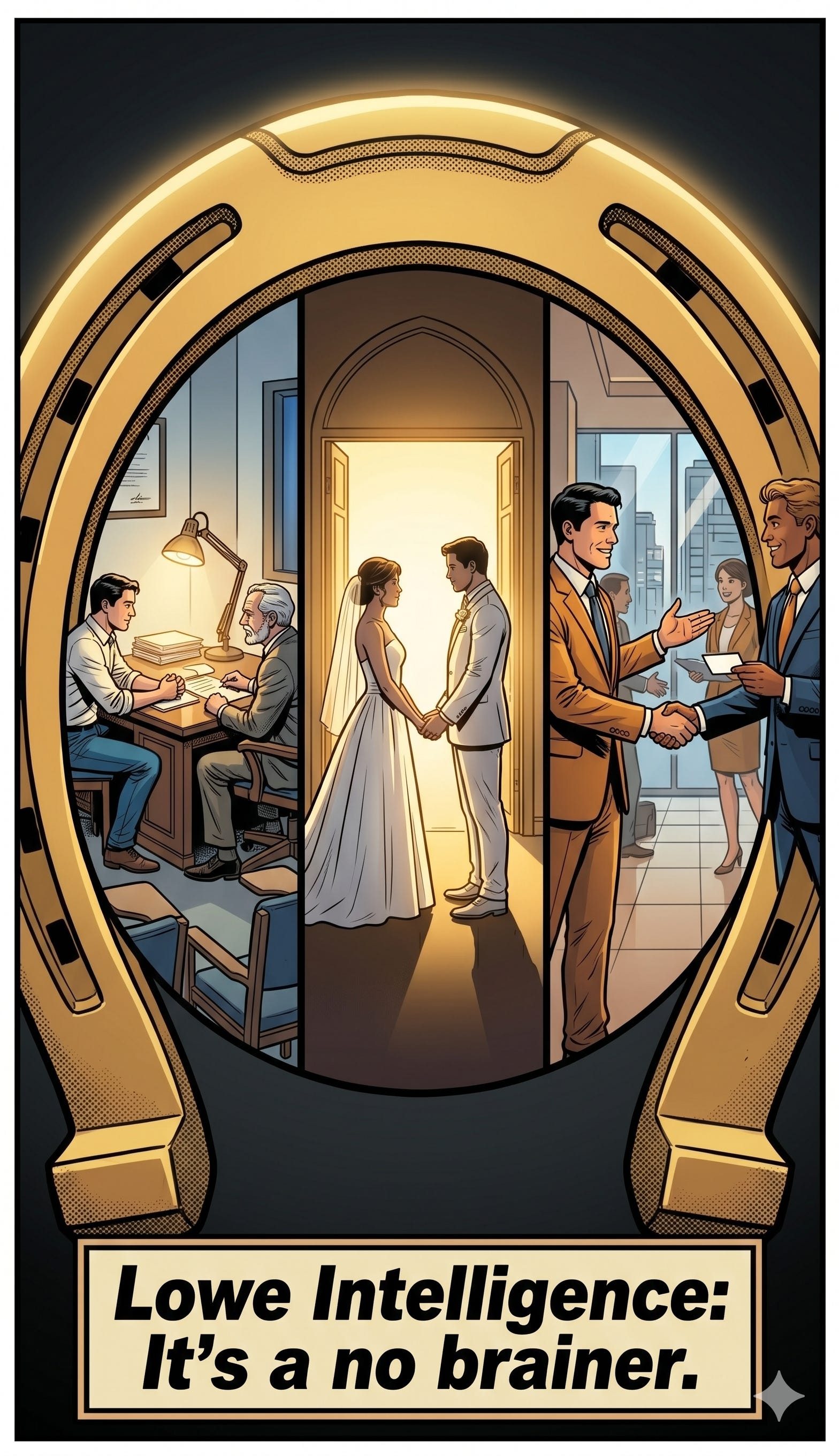
Several of the no brainer rules I wrote for my daughters apply directly here.
The most consequential version of this decision is who you choose as a life partner. As Warren Buffett said: "The most important decision you will ever make is who you marry." Whether or not marriage is your path, the principle holds: the person you build a life with shapes your finances, your ambition, your daily environment, and your sense of what is possible for decades. The right partner is a force multiplier on everything else.
Who you hang out with is who you will become. The people in your orbit determine which rooms you hear about, what opportunities surface, and what kind of thinking rubs off on you over time. A wide network of the wrong people is just a larger surface area for noise and bad decisions.
Consistency is often more important than talent. By simply being present and reliable, you have already done what many others will not. Show up in the rooms where the work is real often enough that you become visible. When you are in the room consistently, people know your name, and they think of you when something opens up. Being seen and being heard are not passive outcomes. They are what consistent presence eventually produces.
In college, that means going to your professors' office hours consistently, not just when you are struggling. Most students never show up. The ones who do are remembered, and are more likely to be offered the paid teaching assistant (TA) position or the research grant that never gets posted anywhere. At work, it means participating in the events worth your time, raising your hand for the challenging assignment nobody else wants, meeting regularly with your manager, and putting your vision on the table instead of keeping it to yourself. The gap between the people who do these things and the people who do not is where a lot of what we call luck actually lives.
Pay it forward. When you know two people who should know each other, make the introduction. Do not wait to be asked. Being a connector keeps you top of mind in rooms you are not even in. The people who introduce generously are the ones others think of first when something good opens up. Luck flows in both directions.
Preparation is what you do with the opportunity once you are there. Showing up is how you access it in the first place.
Get the Big Ones Right
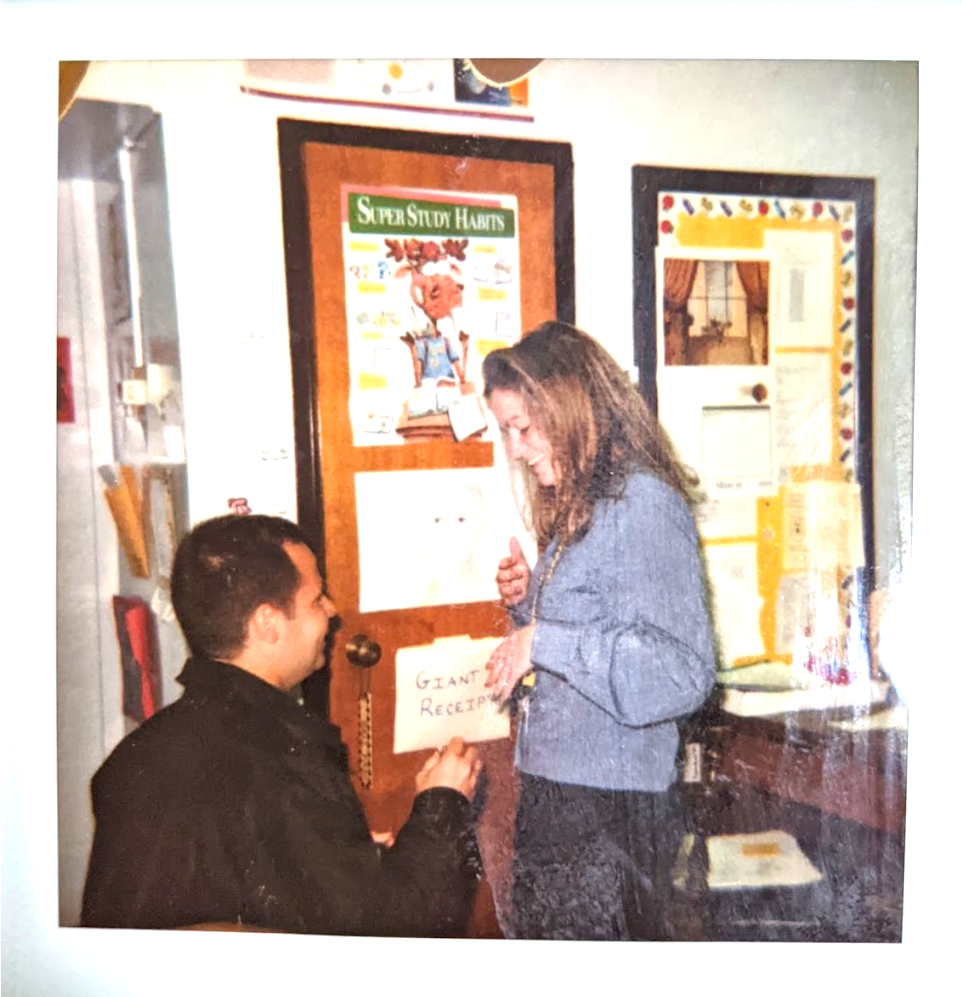
I skipped plenty of hackathons. I missed meetings I should have attended. Didn't speak up when I should have. On the small decisions, my record is mixed at best. But on the ones that actually compound, I got those right. Twenty-five years ago on April 28th, at 3:30 in the afternoon, I married the right person. This article publishes at that same hour. That decision made everything else possible: where we live, the career, and the margin to get other things wrong. Not every missed opportunity costs you the same. Get the big ones right and you have more room to miss the small ones. If you are still early enough to make those calls deliberately, this is the map.
The Lowe Down
Identify one recurring opportunity you have been skipping: a meeting, a community, a submission window. Show up to it consistently before deciding otherwise.
Speak to someone in your field or community you have not spoken to before. Attend something you were invited to but have been ignoring. The orchard only yields if you visit new sections.
Before showing up more broadly, clarify what you are actually looking for. Intensity without intention produces noise, not luck.
Audit who you are spending time with. The people closest to you shape what you believe is possible.
Pay it forward. Make the introduction without being asked. Luck flows in both directions
It’s a no brainer.
Additional Resources
Related Reading
Research
Wiseman, Richard. “A ten-year scientific study into the nature of luck.” Skeptical Inquirer, May/June 2003.
Disclaimer: This content is for informational and educational purposes only. It does not constitute financial, legal, or investment advice. Always consult a qualified professional.
Lowe Intelligence is a trade name of ForsythTrail LLC, a Virginia limited liability company.
I’m lucky to have both of you!